
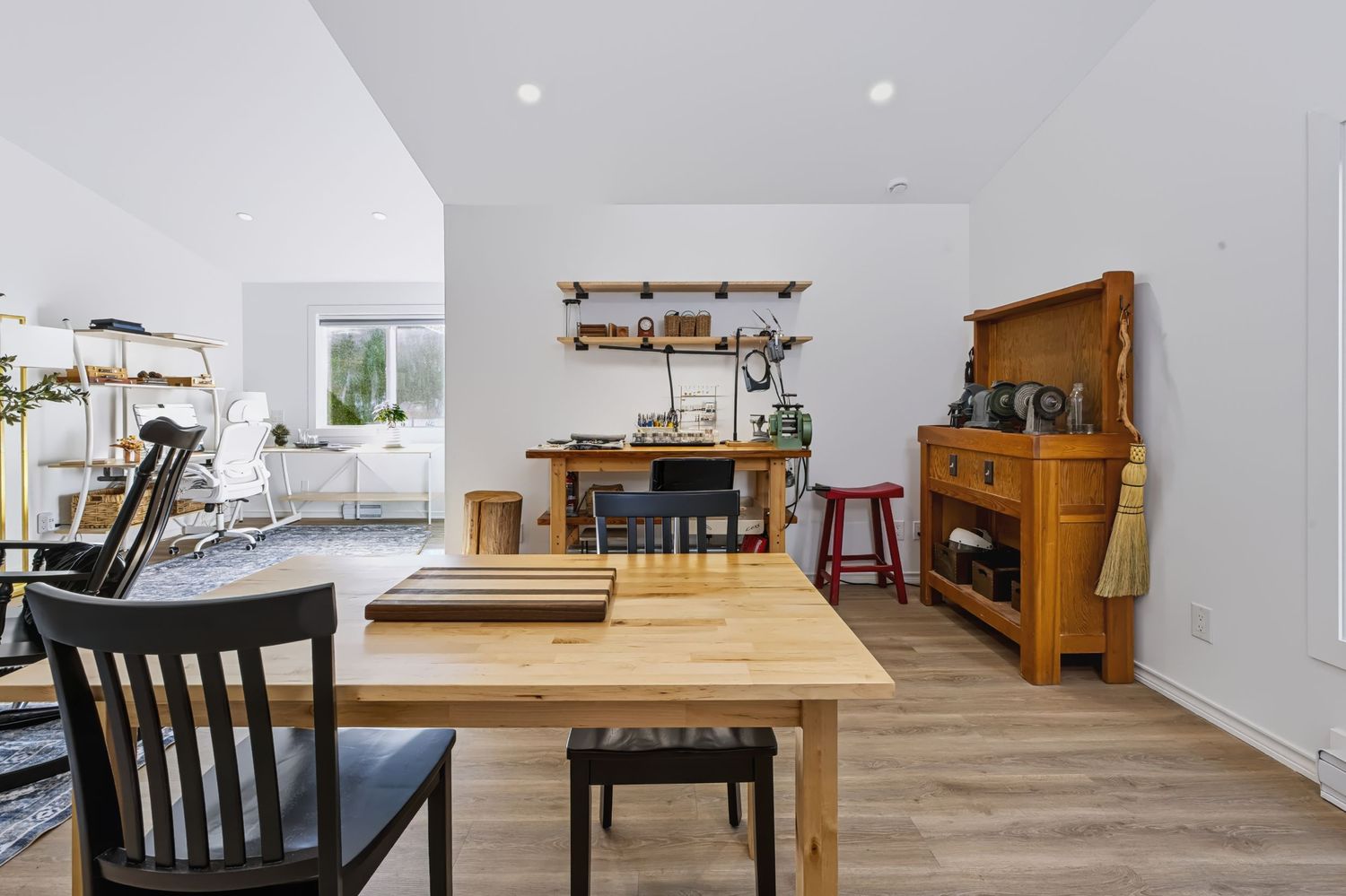
The camera sees everything the eye forgives: a crooked blind, a bin by the back door, a bed half made. A home photographs well when it is finished, clean, and left alone to be itself. Here is how to get it there.
Inside
Clear the surfaces. Counters, coffee tables, nightstands: take away everything that does not belong in the photo, and leave the pieces that show how the room is used. Hide bins, cords, remotes, and personal items. Make the beds, fluff the cushions, straighten the towels. If the home is staged, a final walk-through the morning of the shoot catches what the staging crew missed.
Light
Open the blinds and turn on the lights, and let me handle the rest. I light interiors to show the materials and the work, not to flatten them. If there is a room that only works at a certain hour, tell me when you book and we will plan the shoot around it.
Outside
Move the cars, put the bins away, and give the front approach a quick tidy. Exteriors photograph best in the first or last light of the day, so a full shoot usually runs around those hours. If the landscaping is still coming in, say so: a tight exterior and strong interiors still tell the story.
Timing
Book the shoot when the home is finished, not nearly finished. A missing fixture or a painter's ladder in the corner is the first thing the camera finds. If the schedule slips, move the shoot. A finished home photographs in half the time of one that is not.
What you get
Images ready for listings, portfolios, websites, and print: the rooms, the details, and the exterior, delivered in a gallery you can download and share.
Let's chat!
Photographing a renovation or custom home in South Delta or the Lower Mainland? Tell me about the project.